

The Security Crisis in Mali; Developments Over the Last Two Months
I have studied largely African affairs in my series “Out of Africa”, where suitable background information is available, particularly in Part III.
April 15, 2025 Out of Africa, Part I: Big Picture and position of the US
April 27, 2025 Out of Africa, Part II position of China and Africa & BRICS
May 11, 2025 Out of Africa, Part III: Position of Russia
Introduction
For the past few years, a war with local radical Islamists and Saharan Tuaregs has been going on as well as in the entire SAHEL region Mali, where the military government led by Colonel Assimi Goita has faced increasing pressure following coordinated insurgent attacks, growing criticism of its security strategy, and concerns over the effectiveness of its partnership with Russian military forces.
The former colonial master, France (and the West as a whole), wants to oust the current government and its key supporter Russia, while France wants to restore its former dominance in the country and in the entire French Sahel region (Mali, Burkina Faso, Niger).
Over the past two months, Mali has experienced one of the most serious escalations in violence and political instability since the beginning of the Sahel conflict more than a decade ago. Armed jihadist organizations, separatist movements and internal political tensions have combined to create a highly volatile security environment.
The regional cooperation organization, the Alliance of Sahel States (AES), (Mali, Burkina Faso, Niger) is supporting strongly Mali’s defense operations.
Escalation of coordinated armed attacks
The most significant recent development has been a wave of coordinated attacks carried out by armed groups across multiple regions of Mali. In late April 2026, (April 24 – 26) insurgents launched attacks against military facilities, transportation infrastructure and strategic government positions. The attacks reportedly involved fighters linked to Jama’at Nasr al-Islam wal-Muslimin (JNIM), an al‑Qaida-affiliated organization active across the Sahel. Separatist Tuareg factions associated with the Front for the Liberation of Azawad (FLA) were also believed to have participated in some operations.
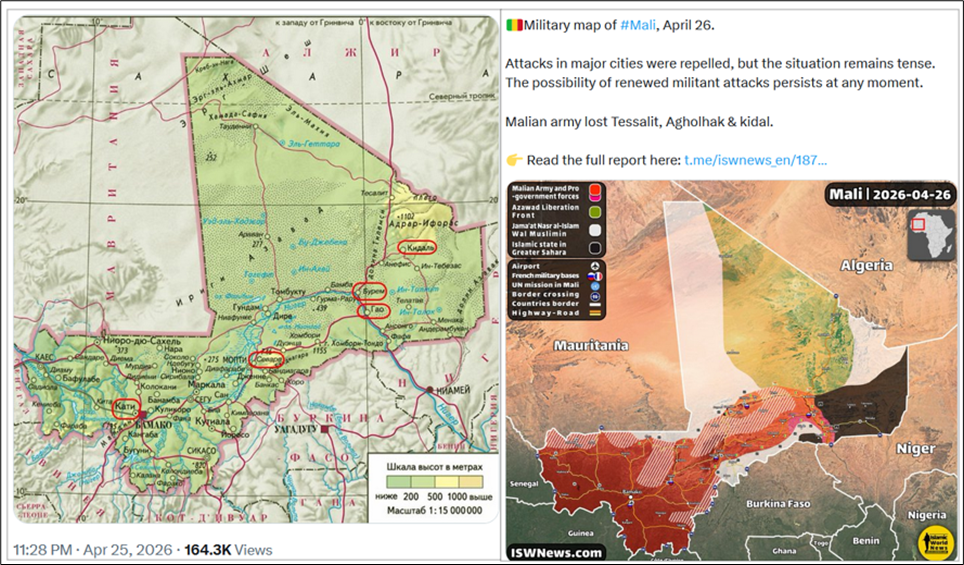
A powerful attack, about 12.000 well-armed insurgents, began on April 25 and was simply well-coordinated and organized. It began with a simultaneous attack by thousands of militants on hundreds of motorcycles and pickups, attacking several strategically important points of the country – the cities Kati, Kidal, Gao, Bourem and Sevare.
Kati – a northern suburb of the capital Bamako, control over which would have allowed the jihadists to attack the capital. And at the same time, success here would have allowed them to tie up the main forces of Russian “African Corps” and local security forces (not allowing them to react to events in the east and north of the country).
Sevare – the most important junction of strategic roads in the center of Mali, control over which would have given the militants the opportunity to cut the country into separate parts and thereby disunite the government forces.
In Gao is a strategically important bridge over the Niger River, control over which would have allowed to control any maneuvers of forces in this part of the country, and in the neighboring city of Bourem is an important junction of roads. And joint control over these areas would also have given the opponents of the official authorities a significant tactical advantage.
And finally, Kidal – a major outpost of the authorities in the northeastern, desert part of the country, populated by Tuaregs.
What made these attacks particularly alarming was their scale and level of coordination. Targets were struck almost simultaneously in different parts of the country, including areas close to the capital, Bamako. Military bases, checkpoints, and logistics centers were attacked, exposing weaknesses in Mali’s intelligence and defense systems. Analysts noted that extremist organizations appear increasingly confident in their ability to challenge the state directly.
From the very beginning of the incursion, it was clear that without massive foreign support and management, this kind of wide-range operation could not be possible. Day by day, practical evidence proved and confirmed this fact. The entire operation and its coordinated offensive measures had been planned, prepared and financed by the French and other Western intelligence services as well as Ukrainian regime and its mercenaries.
Death of Defense Minister Sadio Camara
Another major event was the reported death of Mali’s Defense Minister, Sadio Camara, during the day of security crisis. Camara was one of the most influential figures within Mali’s military government and a central architect of the country’s post‑2021 security strategy. He played a key role in strengthening Mali’s relationship with Russia after the military regime distanced itself from France, the European Union, and the United Nations.
His death represented a political and symbolic loss for the government. Camara was widely viewed as one of the strongest supporters of military rule and one of the architects of Mali’s regional security alliances.
Following his death, transitional leader Assimi Goita reportedly assumed direct oversight of defense affairs, further concentrating power within the presidency. The government also began investigations into allegations that some members of the military may have collaborated with insurgent forces or failed to respond effectively during the attacks.
Quoting Camara’s family and French media, news agencies said the attack – launched by militants affiliated with al-Qaeda in Kati on Saturday – also killed at least three of Camara’s family members.
Government spokesman Issa Ousmane Coulibaly read out a statement on Sunday evening saying Camara had been killed when “a vehicle laden with explosives and driven by a suicide attacker targeted the minister’s residence”.
Fighting from April 25 to May 12
Interesting how a bunch of simple jihadists were able to locate and kill the Malian Defense Minister just in first hours of the mass attack. No, doubt, Western intelligence played a key role in this episode. More 12,000 troops stormed the cities of Mali but were significantly halted by the Malian Army and Russian African Corps. The enemy suffered heavy casualties, over 1000 confirmed by the Malian military.
The Al Qaeda affiliates housed by the Tuareg rebels were able to gain strong positions in Tuareg-populated Kidal region, forcing the Russian unit and Malian military to temporarily retreat to safer lines. The capital city of Bamako was completely cleansed of terrorists, as were surrounding cities. Armed incidences and fighting continued in the remote regions (south of Kidal and Gao) against both terrorist factions for many days.
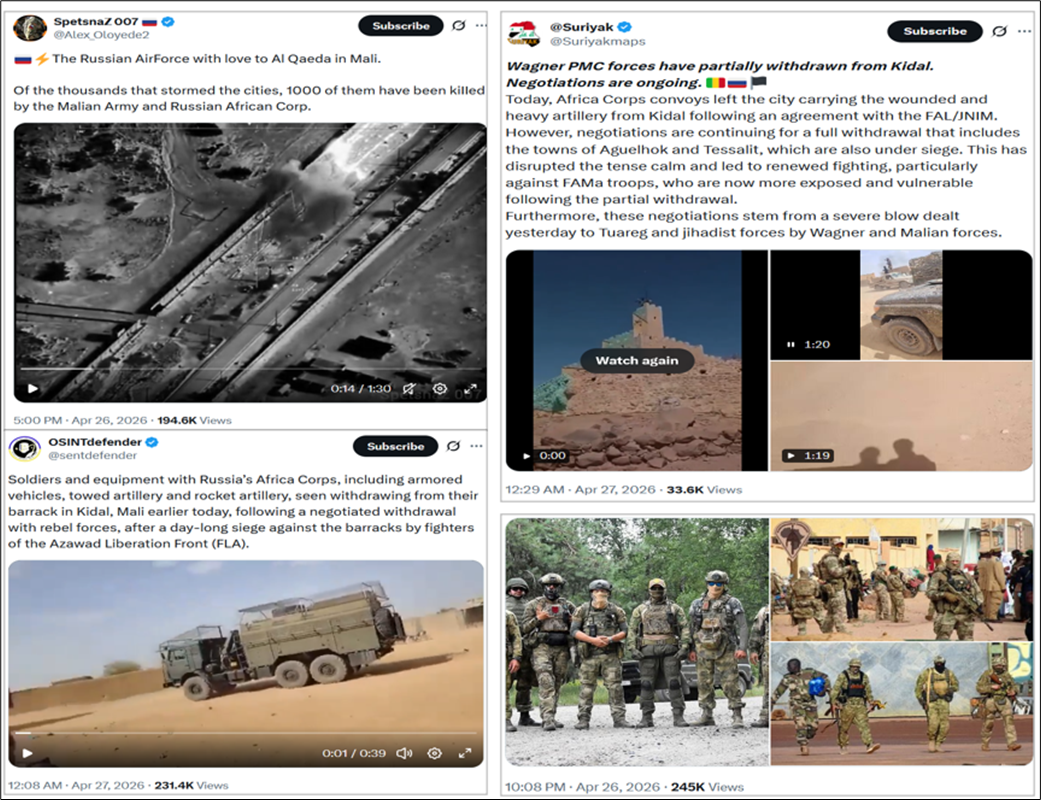
Russian African Corps forces at Kidal repelled, together with then Malian Army, four massed assaults by a force of up to 1,000 militants backed by Ukrainian instructors, operating with 20+ armored vehicles, 80+ pickups, FPV drones, and mortars. Results in 24 hours: 12 pickups destroyed by artillery and mortar fire, around 50 militants killed. Results of the anti-terror operation by the Malian Army and the Russian African Corp in Mali during. April 26: eliminated over 1000 terrorists.
According to the Russian army, the plan was to take down General Assimi Goïta by attacking and controlling strategic locations, including the main military bases as well as the presidential palace; the same scenario that was used to remove the Syrian president. Africa Corps stated that it helped foil the plan and that over 1,000 terrorists were neutralized in the different cities that were attacked.
Regarding help from Burkina Faso and Niger, the AES has a military force called the AES Unified Force. It is headquartered in Niger. Reportedly, the force is in Kidal city alongside the Malian army. It’s the stronghold of the Tuareg population in Mali. The AES force initially consisted of 5,000 men; it was recently increased to 15,000.
Only in few days, by the end of April, the Malian Army (FAMA) and Russian African Coprs stabilized the military situation and inflicted heavy losses on the invaders, some thousands killed and massive equipment and material losses.
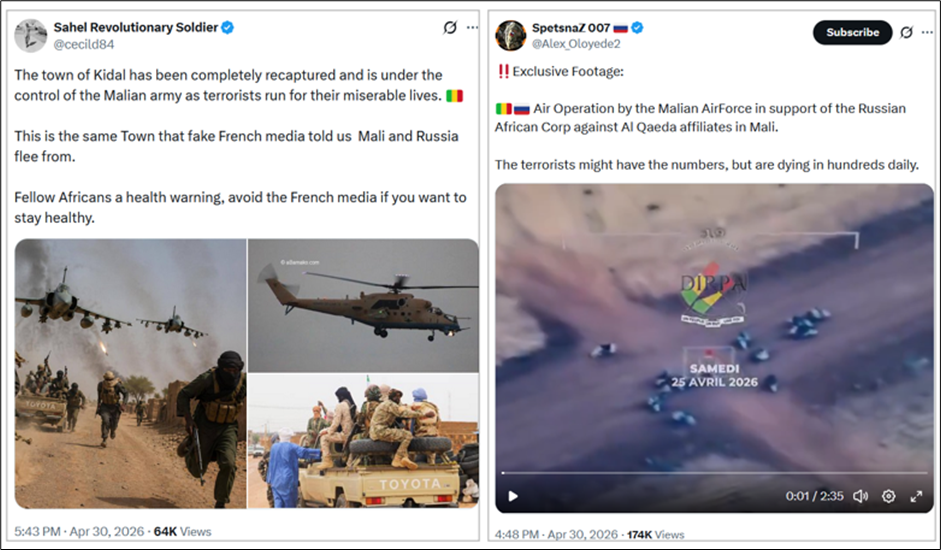
JNIM, with Tuareg rebel allies from the FLA, carried out their biggest coordinated attacks since 2012, hitting Bamako hard; Kati barracks, the airport, and other key areas. They then stormed Kidal, Gao, Sevaré, and other places. But FAMA and the Russian Africa Corps let the attackers overextend, then shut the trap with helicopter gunships, FPV drones, and aggressive ground forces. Hundreds were neutralized, streets were littered from the capital to the desert, equipment was wrecked, and surviving captives were detained. At the end of the day: situation under control, Mali strong, and the extremists utterly destroyed.
Russia’s role in Mali
Over the last several years, Mali has dramatically reshaped its international partnerships. Following tensions with France and criticism from Western governments after the military coups of 2020 and 2021, the military regime expelled French forces and reduced cooperation with international peacekeeping missions. In their place, the government deepened military cooperation with Russian actors, first through the Wagner Group and later through Russia’s Africa Corps structure.
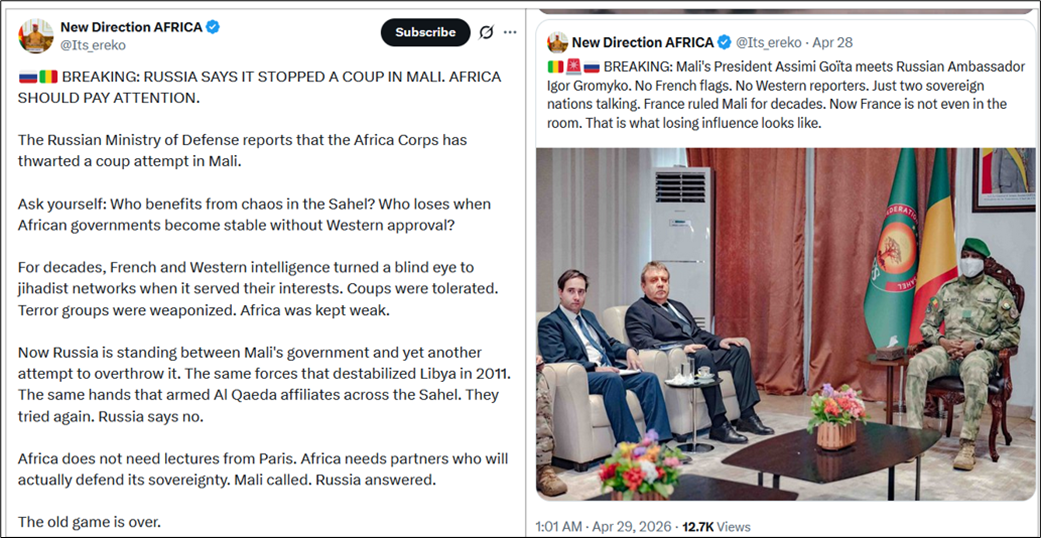
Many western military analysts, particularly in France, have commented recent events, which have raised serious doubts about the effectiveness of this strategy. Russian-linked forces operating alongside Malian troops have reportedly suffered setbacks in northern regions such as Kidal. However, the real situation proved to be unlike what those reports assumed.
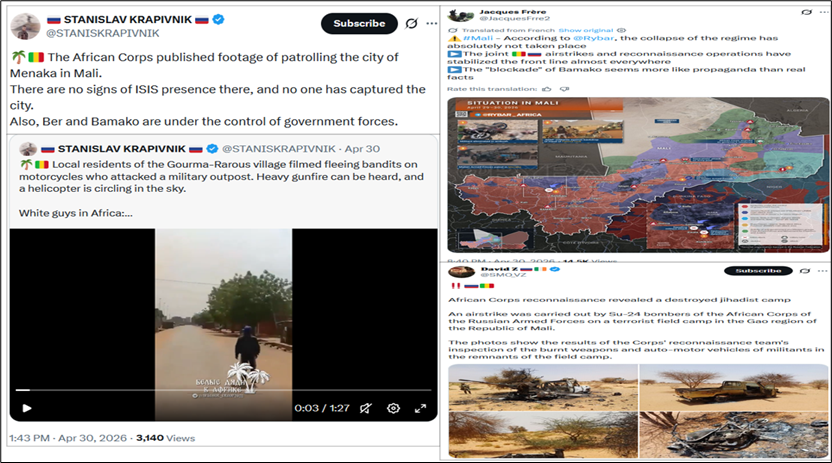
Mali, Burkina Faso, and Niger have increasingly aligned politically under military-led governments, forming a regional bloc that seeks greater independence from Western influence. However, all three countries continue to face expanding insurgencies and economic pressure.
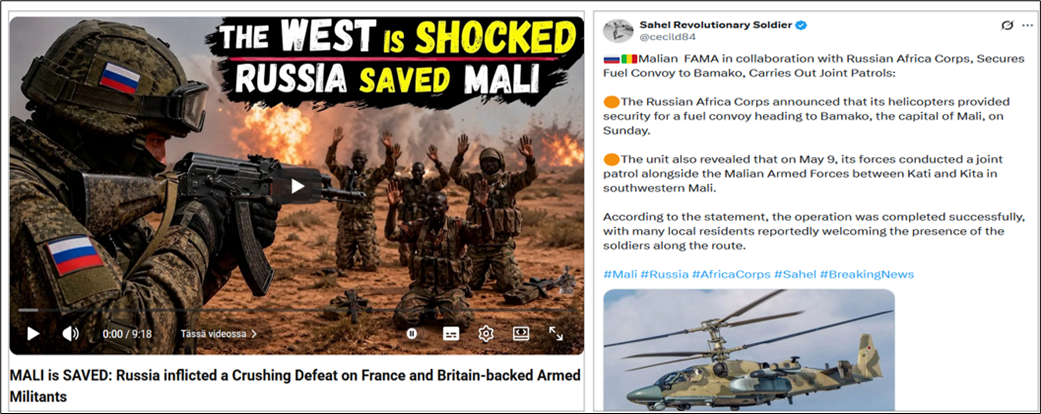
MALI is SAVED: Russia inflicted a Crushing Defeat on France and Britain-backed Armed Militants
BORZZIKMAN April 30, 2026
The Corps reportedly repelled insurgents’ attempts to seize military sites and key infrastructure, resulting in the deaths of more than 2000 hostile personnel and the capture of large quantities of equipment. Malian Prime Minister Abdoulaye Maiga has pointed to the significant role of foreign state sponsors in strengthening the insurgency, following widespread allusions to a particularly central role played by French and Ukrainian forces. The Russian Defence Ministry later issued a statement alleging that the approximately 12,000 insurgents participating in offensives against the government had been trained by Ukrainian and European personnel.
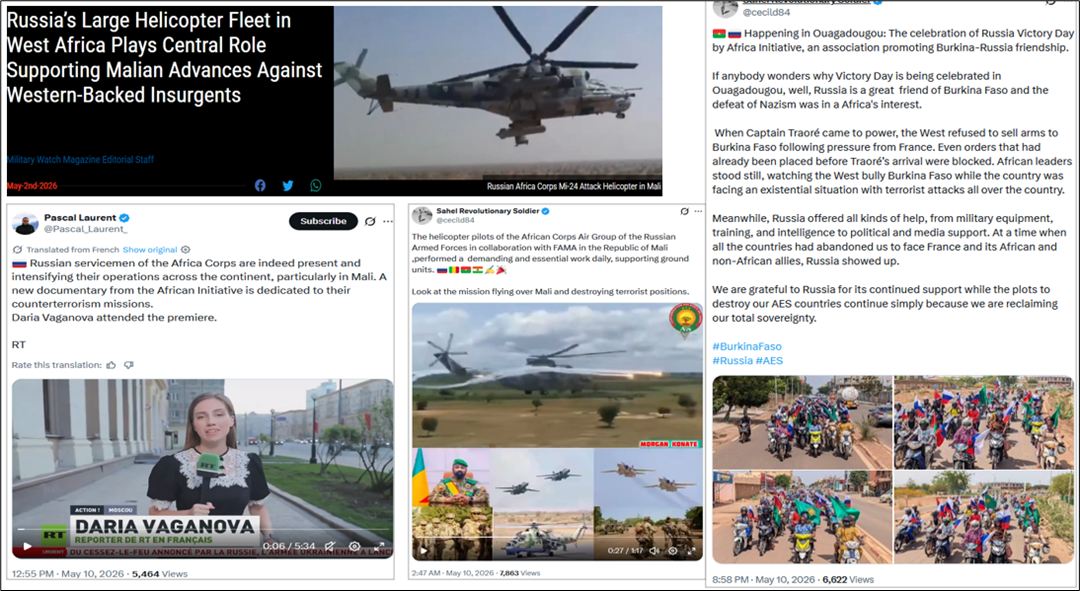
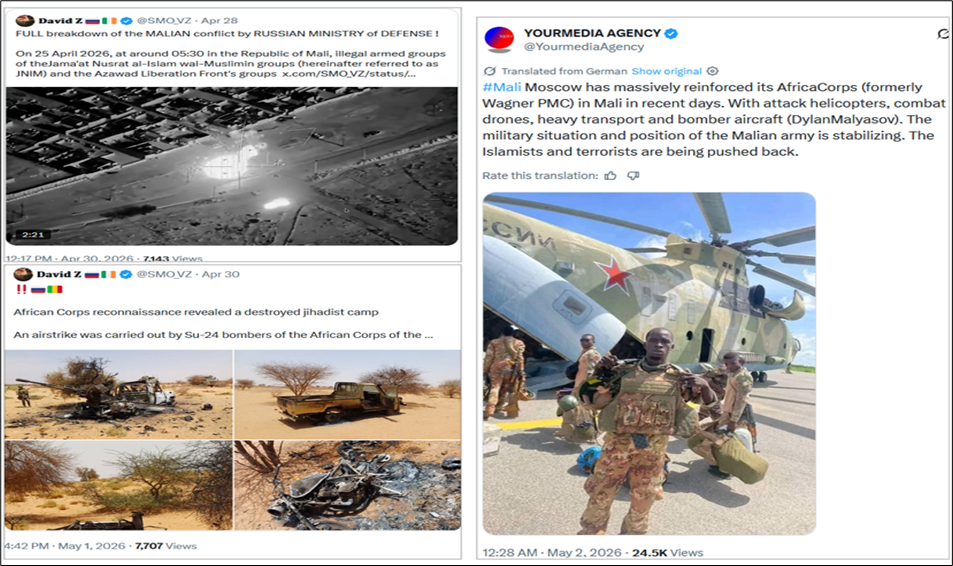
To support counterinsurgency operations in Mali, Russia has assembled one of its most capable combined aviation groupings with a fleet that includes attack helicopters, strike drones, heavy transport aircraft, and strike fighters operating out of Bamako International Airport. Africa Corps helicopters have played a key role in conducting supply runs to forward bases including Hombori in the Gao region, evacuating wounded Russian and Malian personnel from combat zones.
The backbone of this contingent is formed of Mi-8AMTSh combat assault transport helicopters and four Mi-24P attack helicopters. Several scarcer Mi-26 heavy lift helicopters, which are the largest in service anywhere in the world, have also contributed to operations, and are valued for their very high payload capacities. Alongside the Mi-26, the presence of Su-24M strike fighters in Mali has marked a significant escalation of the Russian presence. The logistics chain sustaining these operations is sustained by Russian Aerospace Forces Il-76 transports.
Foreign plot to coup
The purpose of the invasion was to overthrow the current military national regime and replace it with a pro-French one. The coup attempt failed.
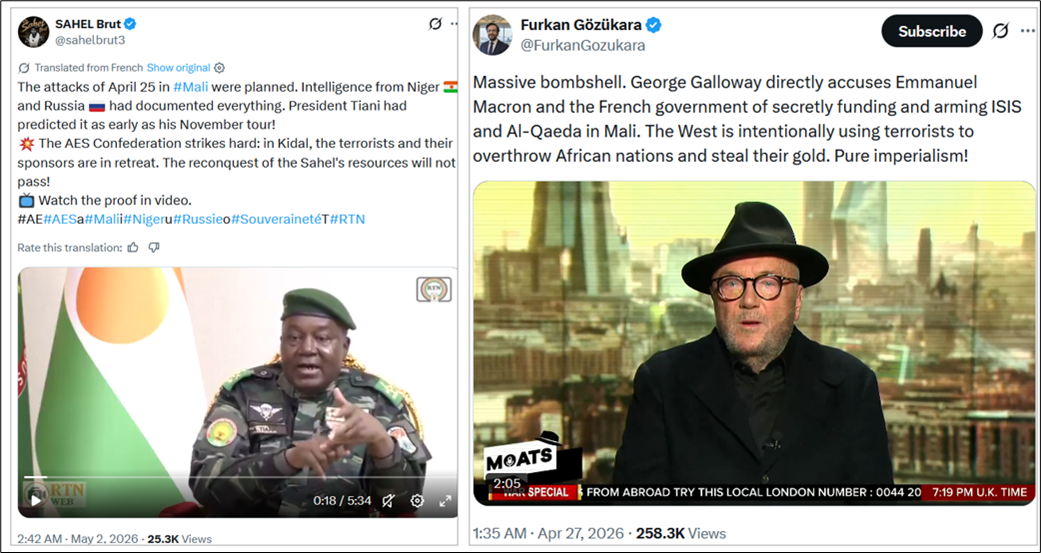
The attacks of April 25 in Mali were planned.
George Galloway directly accuses President Emmanuel Macron and the French government of secretly funding and arming ISIS and Al-Qaeda in Mali. The West is intentionally using terrorists to overthrow African nations and steal their gold. A French consultant and political commentator, Pascal Laurent, has confirmed this story.
It’s eye-opening watching French state media pushing this attack as some failure for Russia (while France spent 9yrs and achieved nothing). Not to talk about Ukrainian media, which is openly cheering in support of Al Qaeda. Maybe they aren’t so different after all.
Following Saturday’s widespread orchestrated attacks, UN chief Antonio Guterres condemned the “acts of violence” as he expressed his “solidarity with the Malian people”. West Africa’s regional bloc, Ecowas, similarly condemned the attacks. Mali, Niger and Burkina Faso left Ecowas after military coups brought their armies to power. Mahmoud Ali Youssouf, chair of the African Union Commission, said he was following the situation with “deep concern”.
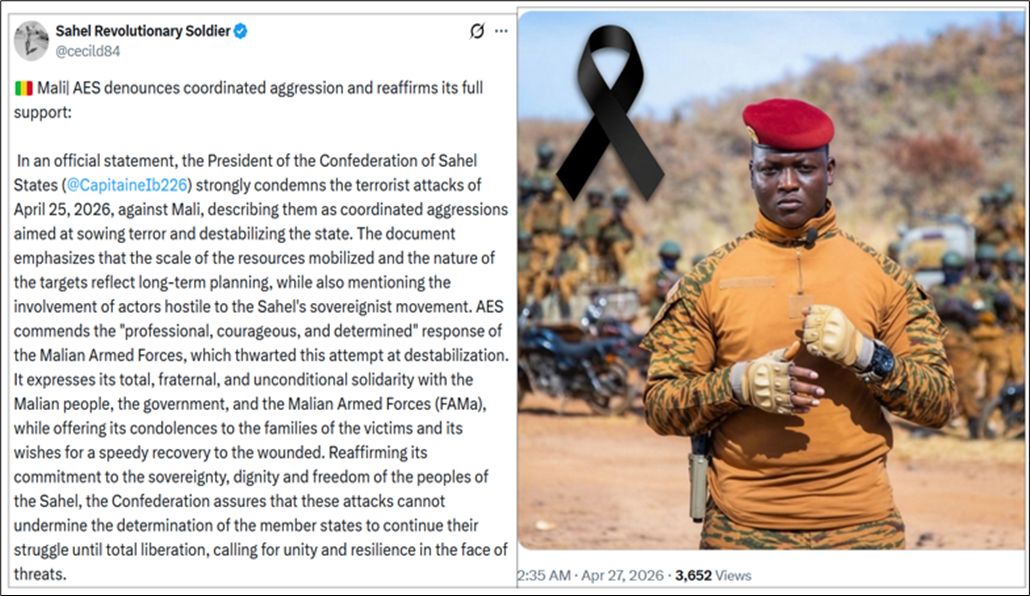
Captain Ibrahim Traoré, Burkina Faso’s military ruler who seized power in a coup three years ago, condemned the attacks in Mali. Traoré is the president of the Alliance of Sahel States (AES), which includes Mali, Niger and Burkina Faso, all countries led by military governments that came to power following coups in recent years. In a statement released on Sunday night, Traoré described the attacks as “barbaric and inhumane” and said they were “backed by the enemies of the Sahel liberation struggle”.
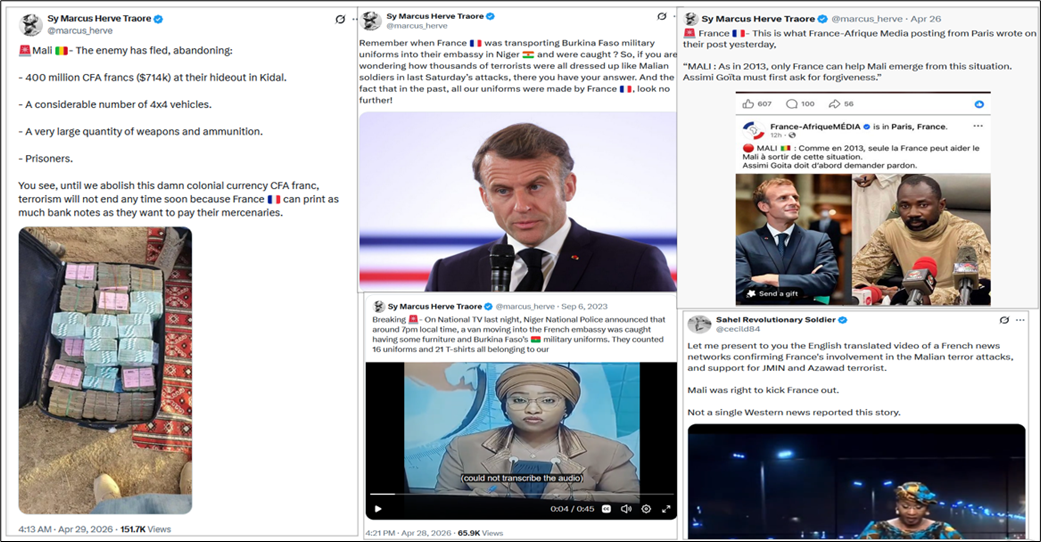
At the beginning of May, information began to emerge that Ukraine was very heavily involved in this operation: UKRAINE HELPS ISIS and THE NATO – TERRORIST AXIS EXPOSED! A captured militant from the Al-Qaeda-linked group “JNIM,” Hama Cissé, has confirmed and confessed that Ukrainian and French instructors were the ones training the radical mobs for the attempted coup in Mali. While Kiev begs for international support, their “specialists” are busy empowering jihadists in the Sahel.
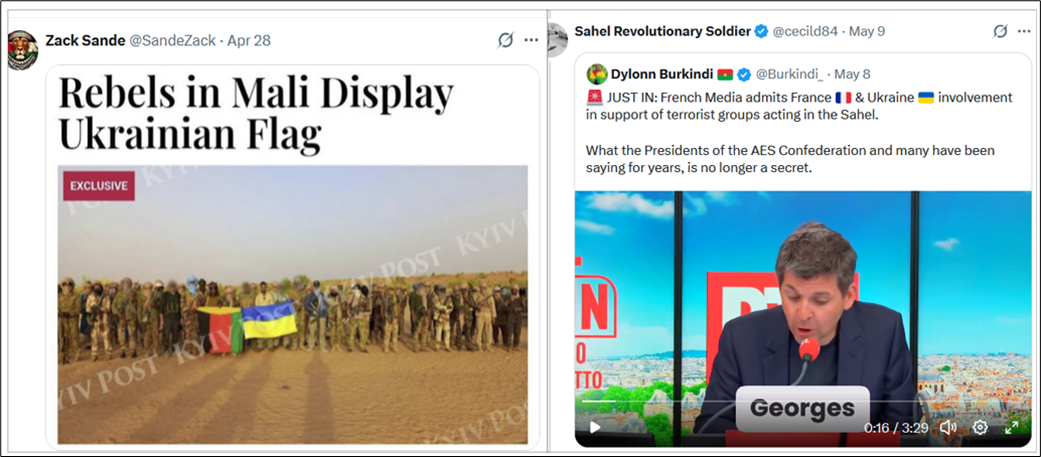
The militants have good weapons and communication devices, and their commanders are effective enough. “It’s not about fragmented tribes running around attacking each other; it’s about a coordinated policy aimed at changing the government in Mali.
The Russian Defense Ministry said earlier that illegal armed groups had attempted to stage a military coup in Mali on April 25. Africa Corps units foiled the coup attempt and prevented mass civilian casualties. The militants lost over 2,500 fighters and 102 motor vehicles. The militants were trained by Ukrainian and European mercenary instructors.
By May 4, the Malian Armed Force have regained control of all the key cities after pushing Western-backed Islamist insurgent groups to withdraw to the north of the country. The insurgency has received considerable positive coverage across the Western world, in part due to Mali’s expulsion of European forces from its territory and its formation of close strategic ties to Russia. Russian forces have played a significant role in spearheading recent counteroffensives to retake ground from insurgents.
Two preliminary conclusions
Based on events and practical evidence found since late April, two significant conclusions can be drawn:
The African people, politicians and military have awakened to realize nationalism and patriotic mood towards their own homeland. Sahel region will never be like before!
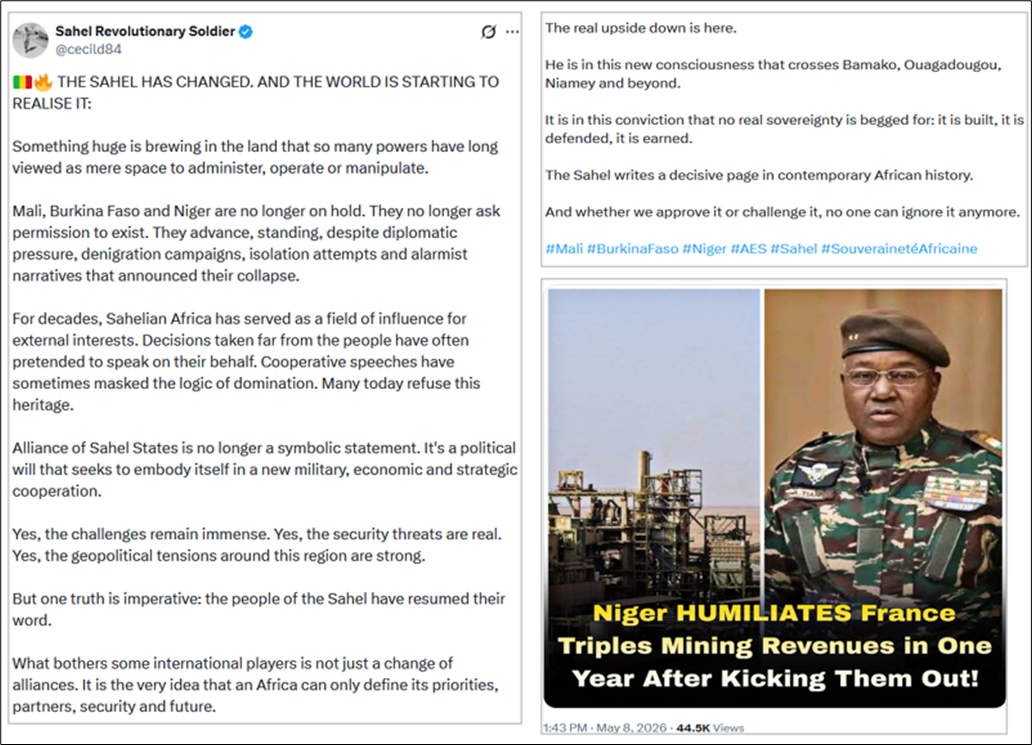
Another conclusion is also confirmed: the political and military position of Russia has strengthened significantly due to this conflict in Sahel region. France’s position is rapidly going down.