


Late autumn potpourri, Part I
The whirlwind of events is currently dizzying. Increasingly wild things are happening all the time, and the pace seems to be accelerating. Below, I have compiled a few key events along with assessments of them. More will follow.
Two major summits took place in the Russian capital, Moscow, week 43.
On Tuesday October 27, Moscow hosted the Gas Exporting Countries Forum, followed by the Russia-Africa Summit on Wednesday and Thursday, October 28-29. The Russian president not only took part in the plenary sessions but also held separate talks with most of the leaders who had traveled to Moscow.
Regarding a summit of the Gas Exporting Countries Forum, after holding multilateral discussions with his counterparts, Putin met separately with several of them, namely Iranian President Masoud Pezeshkian, Emir of Qatar Tamim bin Hamad Al Thani, President of the Republic of Mozambique Daniel Francisco Chapo, President of Equatorial Guinea Teodoro Obiang Nguema Mbasogo, and Chairman of Libya’s Presidential Council Mohamed al-Menfi.
Russia – Africa Summit
The Russia-Africa Summit is being held for the third time and for the first time in Moscow. St. Petersburg hosted the previous summit in the summer of 2023, while the inaugural summit took place in Sochi in the fall of 2019.
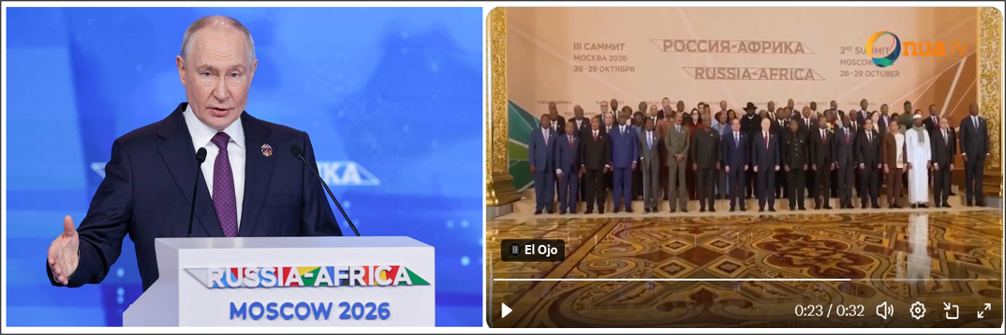
The motto of the Moscow-hosted summit was “For Peace, Security and Development,” which set the tone and defined the topics of discussions. The Moscow summit brought together 22 leaders of African nations, along with high-level delegations from most countries of the continent, and the heads of almost all leading African integration structures. Sixty-one out of the sixty-five delegation that were invited to the Russia-Africa summit in Moscow have attended the event.
According to Presidential Aide Yury Ushakov, 48 of Africa’s 54 countries participated in this year’s summit, including 22 represented at the level of heads of state. The current chairperson of the African Union, President of Burundi Evariste Ndayishimiye, will co-chair various events alongside Putin.
The theme of the Economic and Humanitarian Forum is “Developing Mutually Beneficial Cooperation and Unlocking the Potential of Every African Country Together.” The Russian president also participated in its first plenary session.
Some 150 cooperation documents signed at Russia-Africa summit. Among the key documents are agreements on cooperation in education, medicine, trade, transport, agriculture, sanitary and epidemiological wellbeing, customs regulations
Russia and African countries adopted the 2027-2029 action plan for the Russia-Africa Partnership Forum. The joint action plan contains an extensive list of specific goals aimed at developing Russia’s ties with the countries of the continent in the economic, trade, social and humanitarian spheres, as well as at implementing the decisions made at this summit. As for economic goals, the action plan calls for increasing the volume of mutual imports and exports and improving their structure. The current level of the Russian African trade turnover, which stands at $27 billion, was seen by the delegations as a starting point. Much can and will be done.
The results of productive work at the Russia-Africa Summit are reflected in the Moscow Declaration. This comprehensive document, designed for the long haul, reaffirms the commitment of all our countries to establishing a fair and democratic multipolar world order based on generally recognized principles of international law and the United Nations Charter. It was decided to continue holding Russia-Africa summits on a regular basis.
In his speech, on October 28, Putin stated: “We are witnessing that the multipolar world is becoming reality, and this trend is objective and irreversible.”
The summit noted that Russia has never been a colonial power, so Russia and African countries “are natural allies in building a new, fairer multipolar world order.” The African continent should definitely be represented on the UN Security Council, either as a single voice, or African countries will rotate on the UN Security Council.
The African leaders supported the idea of expanding the network of branches of Russian universities in their countries and creating new educational centers that promote the Russian language, science and culture. The number of African students enrolled in Russia has increased 50% since 2020, and the number of Russian scholarships for Africa has almost tripled. A record number of African citizens are enrolled at Russian universities, about 40,000, for the 2026-2027 academic year.
Russia will continue to supply grain and fertilizers to more than 40 African countries, both contractually and free of charge. Back in the early 2000s, Russia was only a buyer of grain, but now a top grain exporter in the world. Russia promised to adapt agricultural technologies to other climatic conditions, and then Africa will be able not only to produce but also to export its products. Exports of Russian agro-industrial products to African countries amounted to 13 million tons in the first nine months of this year, shipments in individual countries increased several times. Africa supplied $4 billion worth of agricultural products to Russia in 2026 and this figure will continue to grow.
According to Putin, Russia is one of the few countries in the world that can boast full digital sovereignty. Russia is open to transfer modern competencies and high-tech digital know-how to African friends. Russia has built 32 nuclear power plants abroad and is willing to build more such installations, including small power plants, also in Africa. Egypt is an example of this cooperation.
Over the past five years, the BRICS countries produced more than 40% of global GDP, while the G7 contributed less than 30%. The BRICS countries, despite their different development models, advocate equality and respect, and act in solidarity in the search for answers to acute challenges and threats.
Central bank digital currencies could become new instruments for facilitating cross-border settlements between Russia and African countries, according to the authors of a report titled “Russia-Africa: Routes for Capital, Goods, Information, and Specialists,” prepared by Vedomosti business newspaper and members of the New Generation International Club of Young Economists with the participation of the Roscongress Foundation. The report also noted that currency swaps and settlement facilities between the Bank of Russia and African central banks could serve as other effective instruments, with priority given to Egypt, Nigeria, Ethiopia, and South Africa.
Russian investment in Africa should be concentrated in countries and projects where established trade flows or anticipated long-term demand already exist, according to the authors of a report titled “Africa’s Investment Landscape: Conditions, Opportunities, and Models for Russian Business Presence,” prepared by the Financial University, the Roscongress Foundation, and Vedomosti business newspaper.
The report noted that Russia’s offerings to Africa have a distinct sectoral focus. Investments are most frequently associated with energy, nuclear technologies, mineral fertilizers, geology, mining, metallurgy, mechanical engineering, transportation solutions, and education.
Meanwhile, Chinese companies primarily invest in large-scale infrastructure and production chains, companies from the Gulf states favor logistics, energy, and real estate, while Western companies focus on mining, finance, and services.
Russia holds strong positions in the agricultural sector, where Russian suppliers account for approximately 20% of the African fertilizer market, as well as in energy, particularly when it comes to large integrated projects, and mining, where Russian expertise can be applied not only through asset acquisitions but also through geological exploration, engineering services, equipment supplies, and energy provision.
President Putin organized plenty of bilateral and other meetings in the sidelines of the Summit.
Wednesday’s agenda included participation in the third Russia-Africa Economic Summit and Humanitarian Forum, a meeting with the heads of major regional organizations, and a formal reception hosted by the Russian president.
Putin received representatives of Africa’s largest regional organizations who have arrived in Moscow at St. Andrew’s Hall, the most ceremonial and prestigious hall of the Grand Kremlin Palace. The traditional meeting brought together representatives of the African Union, the African Continental Free Trade Area, the East African Community, the Intergovernmental Authority on Development, the Common Market for Eastern and Southern Africa, the Southern African Development Community, the Economic Community of Central African States, the Economic Community of West African States, the Arab Maghreb Union, and the African Export-Import Bank.
Following the plenary session, Putin toured an exhibition at Gostiny Dvor together with African leaders. The exhibition had a practical focus. In addition to showcasing ongoing Russian African projects, it highlighted Russia’s advanced technologies and innovations that Moscow is prepared to share with its partners on the continent.
On Thursday October 29, following an extensive program of the summit’s plenary session, the Russian president held talks with several heads of African delegations, which continued almost until midnight. In particular, he met with the leaders of Namibia, the Republic of the Congo, Burundi, and Kenya. The marathon continued on Friday, with Putin holding talks with the leaders of Sudan, Madagascar, Ghana, Mali, South Sudan, the Central African Republic, the Democratic Republic of the Congo and Togo.
Putin concluded marathon of meetings at Russia-Africa summit. There were so many bilateral meetings with African heads of state that they extended beyond the summit days into the following Friday, October 30. The schedule ran late into the evening almost every day, sometimes continuing well into the night. On Friday, the Kremlin hosted nine protocol meetings alone. All the leaders voiced support for continuing to hold such summits.
The Third Russia-Africa Summit was a success and gave a strong impetus to the development of ties between Moscow and the African continent, Putin said at a press conference following the summit. The other head of states highlighted the significant potential for the further development of relations between Russia and African countries, noting that Moscow welcomed the continent’s aspiration to play a greater role in international decision-making.
Brazil presidential elections
On October 26, Brazil’s President Luiz Inácio Lula da Silva has won a fourth term in office in a dramatic comeback over his right-wing challenger Flávio Bolsonaro. Left-wing leader Lula took 51.79% of votes, becoming the first president since Brazil’s return to civilian rule in 1985 to be elected after losing the first round of voting. Lula told jubilant crowds his victory was a “loss for negativity, lies”, adding “long live democracy”.
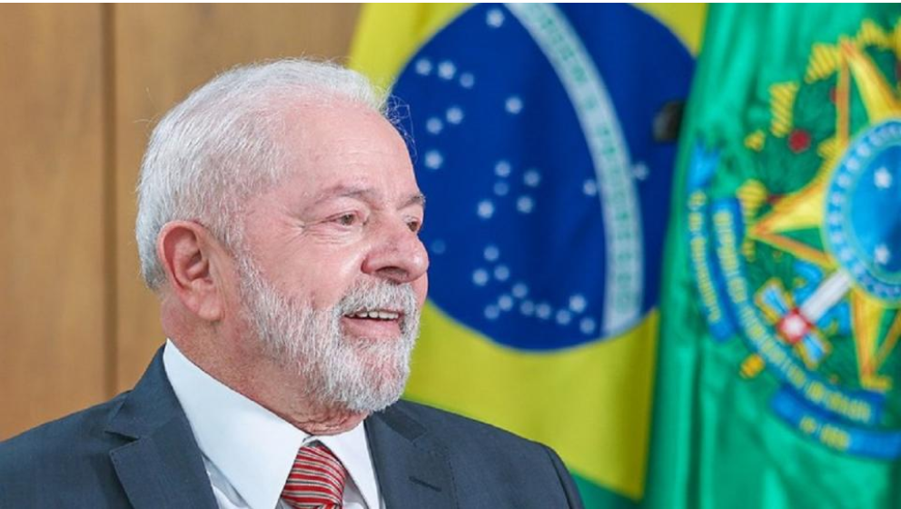
Flávio Bolsonaro, the son of convicted former president Jair Bolsonaro, has so far refused to recognize the result and called for it to be annulled. World leaders have congratulated Lula on his re-election. Bolsonaro’s rejection comes as no surprise to observers. His father did the same but a challenge appears unlikely to succeed.
The Supreme Court Justice Cristiano Zanin decided to extend voting nationwide by two hours. Both teams had requested an extension to voting times – Lula’s had argued that voters in São Paulo and Bahia could not get to the polling stations because of a lack of buses, while Bolsonaro’s campaign cited heavy rain in some areas in the south of the country and in São Paulo as their reason.
The president of the Supreme Electoral Court Kássio Nunes Marques – appointed by Jair Bolsonaro – confirmed Lula’s victory and said that the voter extension did not change the outcome of the race. The sheer gap between the two candidates’ tallies – 4.4 million votes – makes the result more difficult to challenge.
The result came as a surprise after Flávio Bolsonaro won the first round on 4 October with 47% of votes ahead of Lula’s 45%. But Lula’s camp gained momentum ahead of election day, focusing on boosting voter turnout after 33 million people did not vote in round one.
The primary driver of this sensation was a dramatic reduction in voter abstention rates in decisive regions, which provided Lula with an additional 10 million votes. The densely populated state of Minas Gerais proved particularly indicative, radically shifting its preferences between rounds to secure a critical victory for the incumbent.
Brazilian media outlets suggest that Flávio Bolsonaro, emboldened by his first-round lead, assumed victory was inevitable and displayed excessive overconfidence. This posture alienated voters who feared a return to “Bolsonarism”, a liberal economic model characterized by cuts to social subsidies. In contrast, Lula mobilized his base with intensity. He launched the “Lula Army” social media initiative and aggressively promoted his social agenda.
Markets reacted negatively to the unexpected outcome. The Sao Paolo stock exchange opened 15% down, sparking a brief suspension before recovering slightly. Interest rate futures rose as investors scrutinised Lula’s fiscal plans.
Flávio Bolsonaro denies fleeing Brazil after landing in Miami
Brazilian Senator Flávio Bolsonaro, who landed in Miami after losing the presidential election on Sunday, has said it was never his intention to “leave my homeland”. “I did not flee Brazil; I left for the sake of Brazil,” he said in his first statement since his departure.
The US provided visas to him and his family after Brazil cancelled his passports as part of a criminal investigation. Bolsonaro denies any wrongdoing. On Wednesday, US President Donald Trump told reporters: “We gave him a pass to come into the country”.
Newly re-elected President Luiz Inácio Lula da Silva hascriticised Bolsonaro’s secretive exit from the country, saying “those who have nothing to hide have nothing to fear”.
Bolsonaro’s arrival in Florida ended days of confusion over his whereabouts. In a statement, Bolsonaro thanked both the presidents of Argentina and the US, and the American public “who share the same values as the good people of my own country”. “It was never my intention to leave my homeland, but I know exactly where this is heading,” he said. “I departed from a regime of exception so that I could become the leader my people deserve.”
Ex-CIA intelligent officer, Larry C. Johnson, who holds the website service “sonar 21.com”
noted that this “Bolsonaro operation” seems to be clearly organized by CIA.
Foreign reactions and geopolitical consequences
Reacting to the result, US President Donald Trump suggested the election had been stolen. “I didn’t take sides, but it looked like another rigged election,” he told reporters on Monday, without providing evidence or more details.
Mexico’s left-wing President Claudia Sheinbaum said in a post on X: “The people of Brazil won. “Peru’s right-wing President Keiko Fujimori praised Brazil’s “democratic day”. Similar messages were shared by the presidents of Chile and Ecuador. Canadian Prime Minister Mark Carney noted that their two countries had already “flourished under our partnership”. Spanish Prime Minister Pedro Sánchez – also a left-wing leader – called it a “great victory”. South African President Cyril Ramaphosa called Lula’s victory one for the “global south and progressive forces throughout the world”.
This has been a bitterly fought campaign and the new term – set to start on 5 January – comes amid significant constraints at home and abroad, including animosity from the US president.
Referring to what Trump has called the “Monroe Doctrine” – which seeks to establish US dominance in the Western Hemisphere – Lula used his victory speech to insist that Brazil “will not accept being anyone’s backyard”.
For Russia and China, the continuity of the Lula administration ensures that Brazil remains an active and reliable partner within BRICS. Lula’s government strictly adheres to a policy of neutrality regarding the Russia-Ukraine conflict. He has repeatedly stated that Brazil will not supply weapons to Ukraine and has refused to support anti-Russian sanctions, emphasizing his country’s sovereign stance.
Ultimately, Lula’s push for a more autonomous South America will force a revision of the Monroe Doctrine, potentially diverting Washington’s attention toward its own hemisphere and away from other parts of the world.
Midterm miracle in the US
The US midterm elections took place on November 3. The main races were for one-third of the Senate and the entire House of Representatives, as well as governorships in 36 states and territories. Local government elections were also held. Republicans currently control both chambers. The incoming 120th Congress, formed following the elections, will begin work on January 3, 2027. Democrats will now hold majorities in both the House of Representatives and the Senate.
On election night 2024, Donald Trump told a cheering crowd, “I’m not going to start a war, I’m going to stop wars.” Fifteen months later came Operation Epic Fury. Eight months after that, CBS News projects that Democrats will take both the House and the Senate. JD Vance summed it up on X: “The reason we lost is the war.”
According to many commentators, Democrats will have no time for foreign policy issues because of tensions in US domestic politics. Starting in January in the new House investigations against Trump and the people working for him will be launched immediately. In nine to twelve months there will be the first impeachments. From January onward, Trump will be a lame duck.
This outcome is the price President Trump has to pay for diverting from nearly all of his campaign promises. He did not end the war in Ukraine. He has launched a completely unnecessary war against Iran (twice) which led to a significant inflation increase. He has enriched himself through unethical schemes (crypto).
During his last two years, the real mess for Trump will only start after the popping AI bubble drags down the markets. The damage to people’s prosperity will be huge and there is little that he can do about it. Even more fundamental problem is the accumulation of a massive debt burden and its inescapable explosion. But there are still a few months until that happens. After that it will be Treasury Secretary Bessent who will be fired.
Trump may step up pressure on Kiev after the US midterm elections in an effort to bring the Ukrainian conflict to an end more quickly. To end the war in Ukraine will necessitate to get rid of CIA Director Ratcliffe. It is the CIA, not the Pentagon, which is running the show in Kiev. This will be difficult to do as Ratcliffe is a deep-state plant. The Democrats want to continue the war in Ukraine and give him some cover. European officials are “under no illusion” that the Democratic Party’s success in the US midterm congressional elections will automatically normalize transatlantic relations.
As to Iran war, Trump should negotiate an end to the war focusing on two red lines: Iran’s nuclear weapons, and commercial vessels must be able to navigate freely through the Persian Gulf and the Strait of Hormuz. Iranian President Masoud Pezeshkian said at the UN that Iran won’t seek a bomb. Turning that declaration into a commitment the International Atomic Energy Agency can verify, with access to the relevant facilities and nuclear material. The agency has spelled out what access it still needs. Opening the Strait of Hormuz is just the compromise between the parties.
The Democratic sweep is first and foremost a vote against the Iran war that has turned the region into a battlefield. Washington can no longer escalate at will, which is the best guarantee that the attacks on critical oil infrastructure are coming to an end. Trump is unlikely to open a new round of strikes, which is very good news for oil markets and the Gulf.
At the same time, the diplomatic track opened before the elections, with the members of the Mecca defence pact (Saudi Arabia, Pakistan and Türkiye) visiting Tehran, should deliver some stability and also gives Riyadh a seat at the table in shaping the post-war order. The most likely scenario is a negotiated settlement or, at the very least, an end to US attacks.
All in all, the Democratic victory makes an end to the war more likely, and that is good news for the Gulf business and the Middle East in general.
As to the great power relations, no détente or appeasement is in sight. Animosity between the US and Russia may even increase and the competition between China and the US will continue.
Finally, some very interesting statements by well-known experts on key issues:

Trump Midterms Disaster; Russia Strike Ukraine Blackouts Kiev Fears Total Power Shutdown; Druzhkivka
Alexander Mercouris , November 4, 2026
Alexander explains why the Trump midterms disaster will change little in Ukraine, how the stalemate myth hides the fall of Dobropillia and the Russian advance on Druzhkivka, Kramatorsk and Izyum, and why the Azov detention center scandal and NABU raids on the SBU signal a regime losing its grip. With Russia now preparing a tribunal for Zelensky, what happens to Western strategy when the Donbass fortress towns fall?
Judge Napolitano: Midterms Fallout & the Great Unraveling of Trump and America First
Glenn Diesen , November 4, 2026
BREAKING: Vance and Trump Jr. Blame Israel for Iran War – w/ Larry Johnson
Dialogue Works November 4, 2026
Trump’s Presidency in Crisis: Why the Israel Lobby Won’t Let Go
Judge Napolitano – Judging Freedom , November 5, 2026

Alastair Crooke: US-Israel Divide Deepens After Midterm Defeat
Glenn Diesen , November 5, 2026
DIESEL DEAL DEAD: US Floods Ukraine With Weapons⚠️ROUND TWO ON KYIV: 30 Iskanders Ready🎯2026.11.05
PAPE’S ALARM: TRUMP WILL ESCALATE THE IRAN WAR AFTER MIDTERMS
November 5, 2026
University of Chicago professor Robert Pape says the midterm results did not end the danger. They opened it. The moment the polls closed, a historic humiliation hit President Trump, and that humiliation now creates strong incentives to escalate the Iran war before power shifts.